
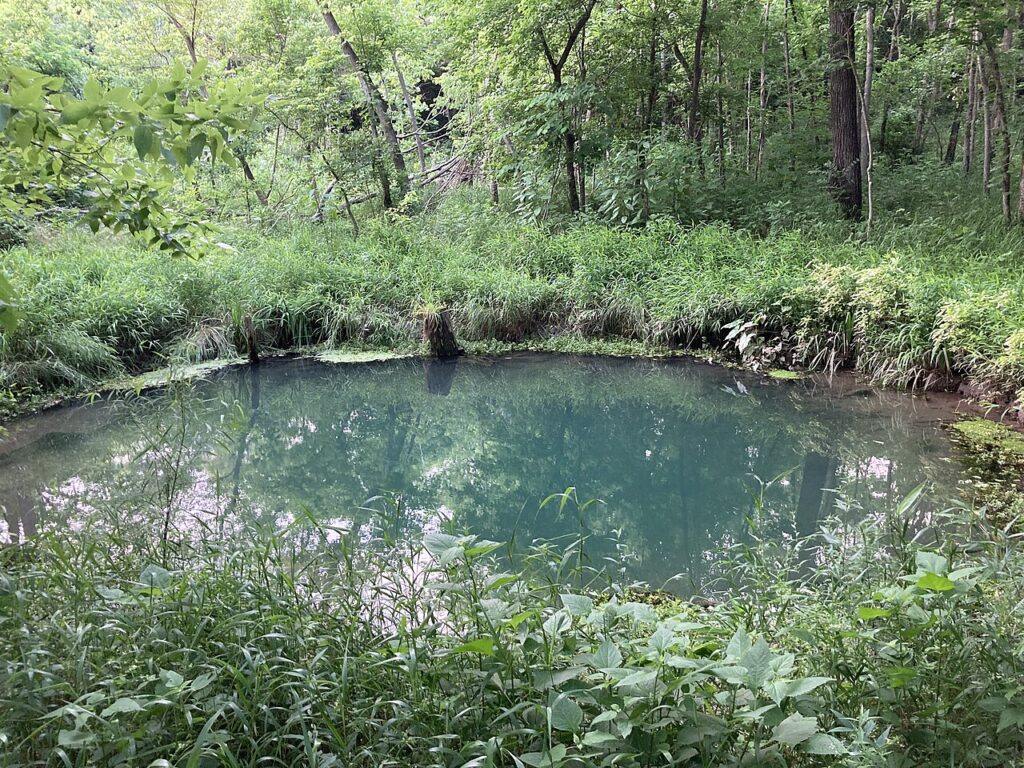
Lexington, Kentucky holds a peculiar distinction among American cities: it was established not because of a river crossing or a trade route, but because of a spring. McConnell Springs, tucked inside a 26-acre urban park off Old Frankfort Pike, is recognized as the site where a party of Virginia surveyors camped in June 1775 and named their encampment “Lexington” in honor of the first battle of the Revolutionary War. That act of naming, recorded in the journal of surveyor John Floyd, predates Kentucky’s statehood by 17 years.
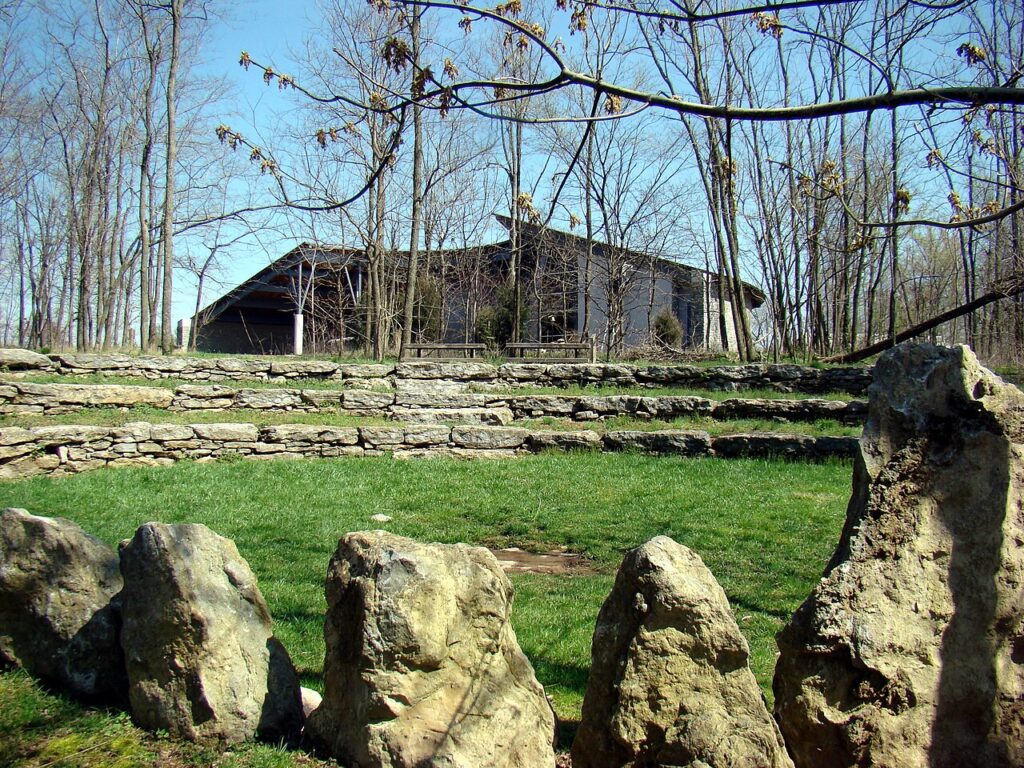
Today the park preserves not only that history but also a mature, ecologically significant urban woodland that illustrates the broader challenges of tree stewardship across Fayette County.
The Natural Setting at McConnell Springs
The springs themselves feed a short but ecologically active stream corridor that flows through the park before joining the broader North Elkhorn Creek watershed. The site features two distinct spring sources — Blue Hole Spring and Logan’s Spring — and the vegetation around them reflects the mesic (moderately moist) woodland character typical of the Inner Bluegrass region. Tree species common to this landscape include bur oak, chinkapin oak, hackberry, sycamore, and silver maple, each occupying microhabitats shaped by slope, soil moisture, and light availability.
Because McConnell Springs sits within a developed urban area, the park’s trees face pressures that woodland trees in more rural settings do not. Compacted soils from foot traffic, altered drainage patterns, and proximity to impervious surfaces all affect root zone health. The Lexington-Fayette Urban County Government manages the site in coordination with conservation partners, and the park’s tree canopy is considered part of the city’s broader urban forest inventory.
Lexington’s Urban Forest and Why It Matters to Property Owners
Fayette County’s urban tree canopy covers approximately 28 percent of the city, according to data from the USDA Forest Service’s urban forestry programs. That figure places Lexington in a competitive position relative to comparable-sized cities, but it also reflects an ongoing maintenance obligation that falls on both municipal agencies and private landowners.
Roughly 60 percent of urban tree canopy in most American cities is located on private property — meaning homeowners and commercial property managers directly control whether the canopy expands, holds steady, or contracts. The species mix in Lexington’s residential and commercial zones closely mirrors what grows at McConnell Springs.
Oaks, maples, sycamores, and hackberries are all common street and yard trees throughout the city. Each of these species has specific structural and health characteristics that influence how and when professional tree care should be performed.
Tree Health Challenges Specific to Central Kentucky
The Inner Bluegrass region experiences a climate that is humid and temperate, with hot summers, occasional ice storms, and spring storm seasons that routinely produce high winds. These conditions create several recurring tree health concerns for Lexington property owners.
Storm Damage and Structural Risk
Ice accumulation is one of the most damaging forces acting on Lexington’s trees. A significant ice storm in January 2009 caused widespread canopy loss across the city, snapping branches and uprooting trees throughout Fayette County.
Trees with co-dominant stems — two main trunks growing from the same base — are particularly vulnerable to ice loading and wind shear. Structural pruning performed on young trees can train single-leader growth and reduce long-term failure risk before problems develop.
Disease and Pest Pressure
Several pathogens and insects have become established in Central Kentucky in recent decades. The emerald ash borer (Agrilus planipennis), a wood-boring beetle native to Asia, has eliminated a significant portion of Kentucky’s ash tree population since its detection in the state in 2009. The Kentucky Division of Forestry maintains current information on emerald ash borer distribution and management for property owners navigating ash tree decisions.
In addition, oak wilt — a fungal disease spread through root grafts and sap-feeding beetles — has been confirmed in multiple Kentucky counties and warrants attention from anyone managing mature oaks.
Soil Compaction in Urban Settings
Lexington’s characteristic heavy clay soils, derived from the underlying Ordovician limestone that defines the Bluegrass landscape, drain slowly and compact readily under foot and vehicle traffic. Compacted soil reduces the oxygen and water available to root systems, weakening trees over time even when no visible damage is present. Vertical mulching, soil aeration, and proper mulch application around the root zone are established arboricultural practices used to address compaction without disturbing existing roots.
Regulatory Considerations for Tree Removal in Lexington
Fayette County property owners should be aware that the Lexington-Fayette Urban County Government has adopted a tree preservation ordinance that applies to development and land-disturbance activities. While routine pruning and removal of trees on private residential lots is generally not subject to permit requirements, projects involving land disturbance, commercial development, or removal of trees within designated buffers may require review under the Lexington zoning code.
Property owners undertaking significant tree work adjacent to rights-of-way or within planned development zones should confirm local requirements before proceeding. For tree removal in historic overlay districts — and Lexington has several, given its concentration of 19th-century built fabric — additional review may apply.
Consulting with Fayette County’s Division of Planning before removing large or historically significant trees in those zones is advisable.
Connecting Landscape Heritage to Responsible Tree Care
McConnell Springs endures as a reminder that Lexington’s identity is inseparable from its natural landscape. The spring-fed woodland that attracted those first surveyors in 1775 persists because it has been actively managed and protected.
The same principle applies to the trees on residential lots, commercial parcels, and municipal rights-of-way across the city. Proper pruning cycles, early intervention for disease and pest issues, and informed decisions about removal and replacement all contribute to the health of a canopy that has ecological, economic, and historical value.
In Lexington, caring for trees is not simply a maintenance task — it is part of stewarding a landscape with deep roots.