
Kentucky’s urban tree canopy faces two of the most destructive invasive pests in North American forestry history. The emerald ash borer (EAB) and hemlock woolly adelgid (HWA) have reshaped tree management priorities across the Bluegrass Region, and Lexington property owners are not exempt from their reach. Understanding the scope of these threats — and how Kentucky’s forest health program addresses them — is the first step toward protecting the trees on your property.
What Is the Emerald Ash Borer and Why Does It Matter in Kentucky?
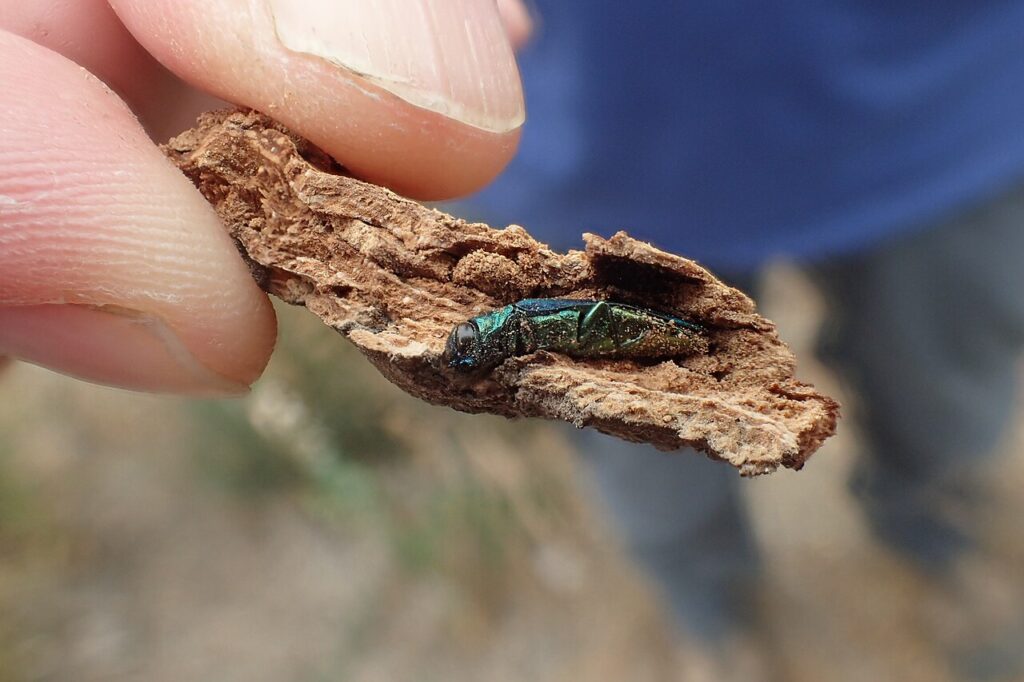
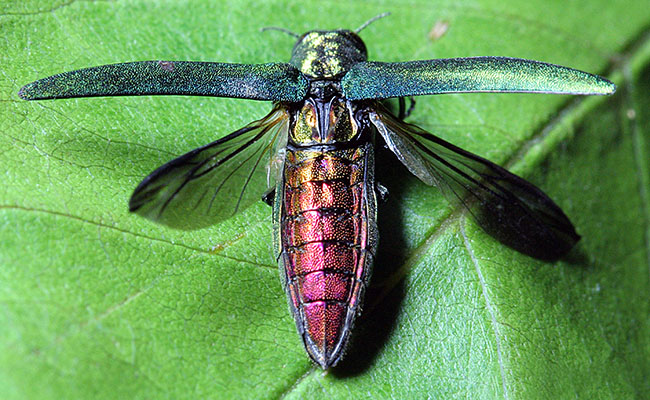
The emerald ash borer (Agrilus planipennis) is a metallic green beetle native to Asia that was first detected in North America in 2002. It kills ash trees (Fraxinus spp.) by tunneling beneath the bark as a larva, disrupting the tree’s ability to move water and nutrients. An infested ash tree typically dies within three to five years of initial infestation.
Kentucky confirmed EAB presence statewide, and Fayette County — home to Lexington — sits within a heavily affected zone. The Kentucky Division of Forestry has tracked the pest’s spread and coordinates with the USDA on detection and response. According to USDA APHIS, EAB has killed hundreds of millions of ash trees across North America since its discovery.
Ash trees make up a significant portion of Kentucky’s urban forest. Many were planted along streets and in residential yards during earlier periods when they were favored for their fast growth and adaptability to Central Kentucky’s clay-heavy soils and humid summers.
The KDF Forest Health Program: Kentucky’s Official Response
The Kentucky Department of Forestry (KDF) operates a dedicated Forest Health program that monitors, maps, and responds to invasive insects and diseases affecting the state’s trees. The program issues annual updates — often called “Forest Health Highlights” — that summarize the spread of known pests and flag emerging threats for landowners and managers.
For EAB, KDF’s response centers on three strategies:
- Detection surveys — field scouts and trapping networks identify newly infested areas
- Biological control releases — parasitoid wasps (Spathius galinae, Tetrastichus planipennisi) are introduced to suppress EAB populations in select areas
- Landowner outreach — guidelines published by KDF help property owners identify symptoms and evaluate treatment options
The KDF Forest Health team works alongside the USDA Forest Service and university extension services, including UK Cooperative Extension, which maintains resources specific to Central Kentucky tree management.
Hemlock Woolly Adelgid: A Slower But Equally Lethal Threat
The hemlock woolly adelgid (Adelges tsugae) is a small, aphid-like insect that feeds on Eastern hemlock (Tsuga canadensis) trees by extracting sap from the base of needles. Woolly white egg masses along hemlock branches are the most visible sign of infestation. Without treatment, infested hemlocks typically decline and die within four to ten years.
HWA has spread steadily into Kentucky from the Appalachian region to the east. While the pest is more prevalent in the state’s eastern counties, its range is moving westward as winters remain milder — a trend relevant to Central Kentucky, where hemlock grows in riparian corridors and shaded urban landscapes. The USDA Forest Service tracks its spread and coordinates treatment efforts across affected states.
Treatment options for HWA include systemic insecticide applications — typically imidacloprid or dinotefuran — applied as soil drenches, trunk injections, or basal bark sprays. Timing and method vary based on tree size, proximity to water sources, and the severity of infestation.
Identifying Symptoms on Your Lexington Property
Recognizing early signs of either pest gives property owners the best chance of preserving affected trees. For EAB, watch for:
- Thinning or yellowing crown foliage beginning at the top of the tree
- S-shaped larval galleries visible under loose or splitting bark
- D-shaped exit holes (about 1/8 inch wide) in the bark
- Increased woodpecker activity, as birds forage for larvae beneath the bark
For HWA on hemlocks, look for white, cottony masses at the base of needles, needle drop from the lower branches upward, and overall canopy thinning. Both pests tend to progress faster on trees already under stress from drought, compaction, or soil disturbance — conditions common in Lexington’s developed neighborhoods and commercial corridors.
Early detection matters significantly. Trees treated in the early stages of EAB infestation have substantially better survival rates than those treated after crown dieback exceeds 50 percent, according to Purdue University Extension.
Protecting Trees on Your Lexington Property
If you own ash or hemlock trees in the Lexington area, proactive evaluation is worth considering — especially given how quickly EAB can progress undetected. A qualified arborist can assess infestation stage, evaluate treatment feasibility, and determine whether preservation or removal is the appropriate course of action for each tree.
Preventive insecticide treatments for EAB are most effective when applied to ash trees showing no or minimal symptoms. Once a tree has lost more than half its canopy, treatment is unlikely to restore it to health. Similarly, hemlock treatment programs require consistent follow-up applications to remain effective over time.
Understanding the biology and spread patterns behind these pests helps Lexington property owners make informed decisions — not reactive ones. Whether you’re managing a single backyard ash tree or a larger wooded parcel, knowing what to look for puts you ahead of the damage curve.
Get a Tree Assessment in Lexington, KY
If you have ash or hemlock trees on your property and want a professional evaluation, Central KY Tree Service provides assessments and treatment consultations for Lexington-area homeowners and commercial property managers. Whether the goal is preservation, treatment planning, or safe removal of a heavily infested tree, having a trained eye on your trees is the most reliable way to protect your investment in your landscape.
Request a free quote to schedule an on-site consultation.