Trees are woven into the identity of Lexington, Kentucky. From the horse farm corridors of the Bluegrass Region to the mature canopies shading neighborhoods like Chevy Chase and Beaumont, trees define the landscape here. Managing those trees, however, involves more than seasonal pruning — it involves understanding the regulatory framework established by the Lexington-Fayette Urban County Government (LFUCG).
Property owners, landlords, and anyone responsible for land in Fayette County benefit from knowing how these rules work and why they exist.
What Is the Lexington-Fayette Urban County Government?
The Lexington-Fayette Urban County Government is the consolidated city-county government serving Lexington and Fayette County, Kentucky. Created in 1974 through a merger of the City of Lexington and Fayette County, LFUCG is one of the few fully merged urban-county governments in the United States. This structure means that tree-related regulations apply uniformly across both urban and suburban areas of the county.
Tree oversight primarily falls under the Division of Environmental Services, which houses the Urban Forestry program. This program manages trees on public rights-of-way, enforces tree preservation ordinances, and administers policies that directly affect what property owners can do with trees on or near their land.
LFUCG’s Urban Forestry Program and Public Trees
The Urban Forestry program manages Lexington’s public tree inventory — the thousands of trees lining streets, filling parks, and anchoring green spaces throughout the city. These are public assets, and removing, trimming, or disturbing them without authorization is prohibited under local ordinance.
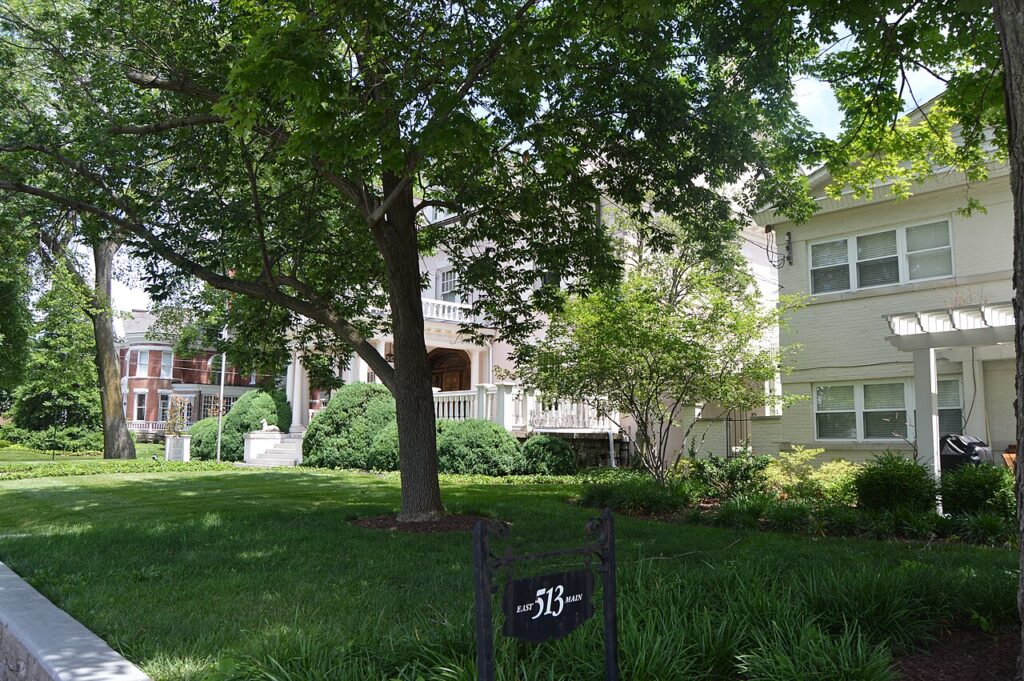
This distinction matters enormously to property owners. Residents may not perform tree trimming or removal on these trees without LFUCG approval, even if a tree overhangs their driveway. Trees growing within the public right-of-way — typically the strip between the sidewalk and the curb — belong to the city, not the adjacent property owner. Unauthorized removal can result in fines and required replacement at the property owner’s expense.
Lexington has participated in the Arbor Day Foundation’s Tree City USA program for many consecutive years. This designation requires a formal tree ordinance, dedicated funding for community forestry, and an annual Arbor Day proclamation — signaling a meaningful, ongoing municipal commitment to urban tree care.
.jpg)
Tree Preservation During Development
LFUCG’s tree regulations most directly affect property owners and developers during the land disturbance review process. Lexington’s zoning and subdivision regulations require tree preservation plans for new construction projects, and significant or specimen trees may require special protection or replacement if removed.
A significant tree under LFUCG guidelines is generally defined by trunk diameter measured at breast height (DBH) — the standard arboricultural measurement taken at 4.5 feet above ground. Trees meeting or exceeding the defined DBH threshold may trigger additional review, replacement ratios, or mitigation fees when removed as part of a permitted project.
Property owners planning additions or landscaping involving large tree removal should consult LFUCG’s Division of Planning before beginning work to avoid stop-work orders or remediation costs.
Why Tree Canopy Matters in Lexington’s Climate
Lexington’s location in the Inner Bluegrass region places it in a humid subtropical transition zone with hot, humid summers, ice storm-prone winters, and active spring storm seasons. Kentucky averages roughly 50 inches of precipitation annually, and spring thunderstorms regularly produce high winds that can compromise structurally weak or diseased trees.
The urban heat island effect — where paved surfaces absorb and re-emit significantly more heat than vegetated land — is an active concern in Lexington’s denser neighborhoods. According to the U.S. Environmental Protection Agency, daytime urban temperatures can run 1–7°F higher than surrounding rural areas, with humid regions like central Kentucky experiencing some of the greatest differences.
A healthy urban tree canopy directly counteracts this through shade and evapotranspiration — the process by which trees release water vapor from their leaves, cooling the surrounding air. Maintaining canopy reduces stormwater runoff, lowers ambient temperatures, and improves air quality.

Private Property Trees and Neighbor Disputes
LFUCG’s jurisdiction has limits.
Trees rooted entirely on private property generally fall outside direct municipal regulation, though local nuisance ordinances may apply if a tree poses a hazard to public infrastructure or neighboring property. Kentucky courts generally follow the Hawaii Rule in tree-related disputes — a legal standard under which a landowner can be held liable for damage caused by a hazardous tree if they knew or should have known about the hazard.
This places a practical responsibility on property owners to monitor tree health proactively. The International Society of Arboriculture defines a hazard tree as one with a structural defect likely to cause failure that could strike a person, building, or vehicle.
Dead limbs, trunk decay, and crown dieback are warning signs that warrant evaluation by an ISA Certified Arborist — a credential that requires demonstrated knowledge of tree risk assessment and care standards. When a tree straddles a property line, it is legally considered joint property — neither owner may remove it without the other’s consent.
Storm Damage Response and Working With LFUCG
Lexington’s storm season creates consistent demand for emergency tree service. When a downed tree or large limb blocks a public street or sidewalk, LFUCG’s Urban Forestry crews handle removal from the right-of-way. Debris that falls entirely on private property generally remains the responsibility of the property where it landed, unless negligence by the tree’s owner can be demonstrated.
Property owners navigating tree issues can work with LFUCG through several channels:
- Hazardous public tree: Submit a service request through LFUCG’s online portal; Urban Forestry staff will evaluate and respond.
- Street tree maintenance: Contact LFUCG rather than hiring a private contractor — unauthorized work on public trees carries penalties.
- Development near trees: Consult the Division of Planning before submitting applications involving significant tree removal.
- Private neighbor disputes: LFUCG does not mediate these; property owners should seek legal counsel or private mediation.
Understanding where LFUCG’s authority begins and ends helps Lexington property owners avoid costly mistakes — whether that means protecting a tree they assumed was theirs to remove, or knowing how to seek city assistance after a storm.