Homeowners should not trim or remove any branch that is close to a power line. Federal OSHA rules and the ANSI Z133 standard keep untrained people at least 10 feet from lines up to 50 kV, and the utility handles trimming near its own lines.
Trees and lines share the same space on many Lexington streets, and the rules about who can cut what depend on where the branch is. This guide separates the work a homeowner can do from the work reserved for utility-qualified crews.
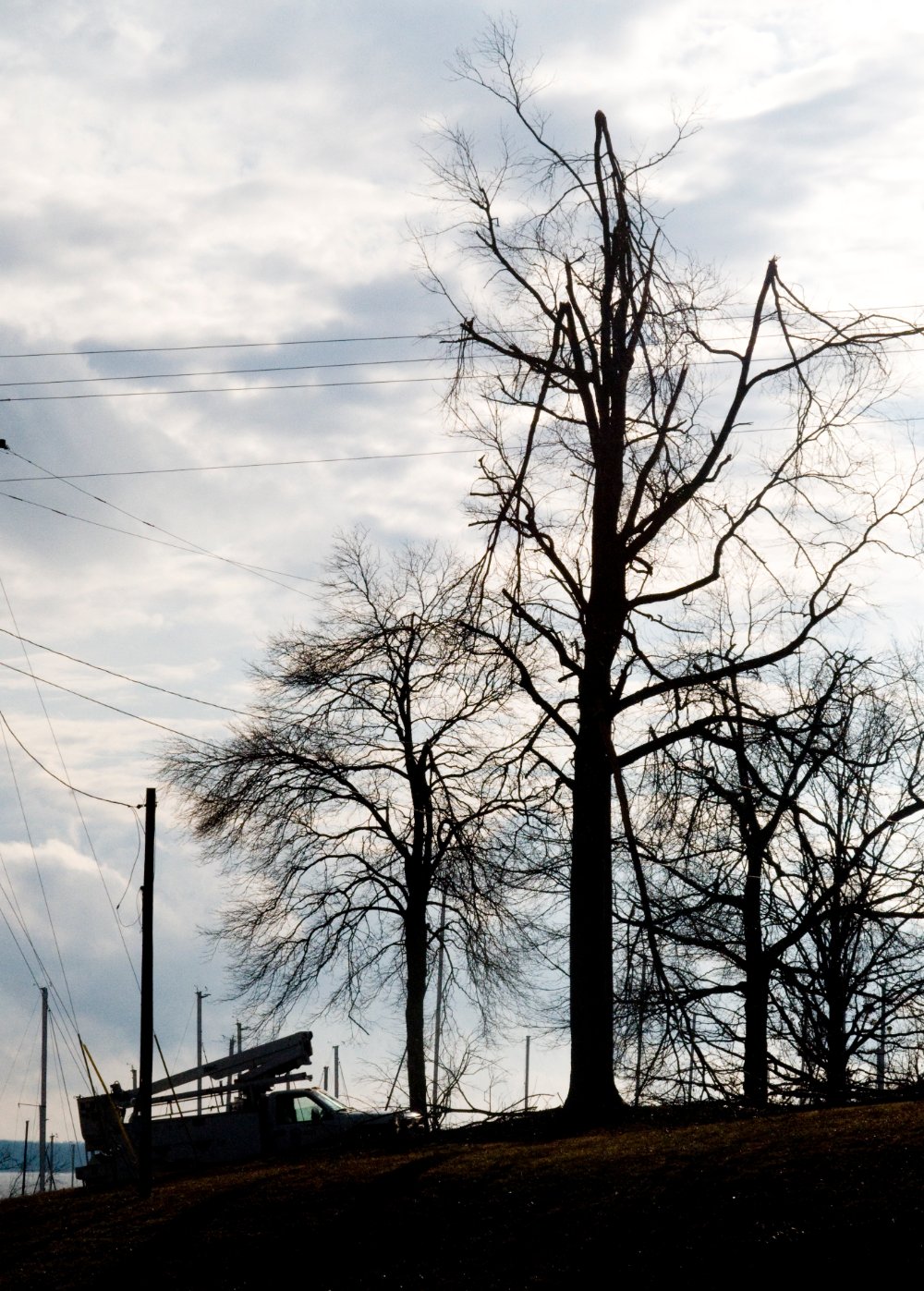
Why 10 feet is the working number
Wood is a poor conductor when dry and a good one when wet or green. A live limb, a ladder or a pole saw can carry current to the person holding it. OSHA sets a minimum approach distance of 10 feet for workers who are not qualified line-clearance personnel, for lines up to 50 kV, and ANSI Z133 carries the same rule into tree work. The overview of ANSI Z133 explains how the standard shapes professional tree care.
Who trims what
| Situation | Who normally handles it |
|---|---|
| Branches near high-voltage lines on the street | The electric utility or its qualified contractors |
| Service drop from the pole to the house | The utility, which can disconnect or shield the line |
| Branches clear of any line | The homeowner or a tree service |
| Tree growing into a line | Reported to the utility, not cut by the owner |
LG&E and KU publish vegetation guidance on their tree page, including that line clearance is a utility responsibility and that crews, not customers, should work near energized lines. The rules about trees on city right-of-way are in the guide to Lexington tree regulations, and the overview of tree service licensing in Kentucky covers who may do the work.
What homeowners can do
- Keep ladders, poles and tools well away from anything that looks like a line, including the service drop to the house.
- Report limbs touching or growing into a line to the utility rather than pruning them.
- Choose smaller, lower-growing species when planting under or near lines.
- Plan trimming for the dormant season where possible, as covered in the guide to the best time to trim trees.
After a storm, a tree resting on a line should be treated as live until the utility says otherwise. The same triage in the ice storm damage guide applies to anything near wires.
Planning trees around lines
Utility vegetation programs aim to keep growth clear of lines over time, which is why crews may prune a tree on a regular cycle. Healthy structure and a balanced crown make that pruning less harmful. Work that is in the owner’s hands, such as routine trimming away from lines or removal of a tree that is too large for its spot, is best done before a storm, not after one.
Frequently asked questions
Who is responsible for trimming trees near power lines?
The electric utility handles clearance around its own lines. Homeowners are responsible for trees that are clear of lines.
Can I trim a branch that is close to a service line?
Safety standards advise against it. A branch within about 10 feet of a line should be left to the utility or a qualified crew.
What if a tree falls on a line during a storm?
Stay well back, assume the line is live and call the utility and emergency services. Nobody should approach until the utility confirms the line is de-energized.
Does the utility remove the whole tree?
Utility crews normally prune to keep lines clear. Removing a tree entirely, or clearing the wood from a yard, is typically the property owner’s responsibility.
Trees near lines on your property?
Central Ky Tree Service handles trimming and removal around Lexington and works with the utility on anything that touches a line. Details are on the tree trimming page, and urgent problems go through the emergency page.
Sources
- LG&E and KU, trees and power lines: lge-ku.com/trees
- OSHA, Occupational Safety and Health Administration: osha.gov
- American National Standards Institute, ANSI Z133 arboricultural safety: ansi.org