
Usually only when the tree lands on something your policy covers. The Kentucky Department of Insurance says most policies cover tree removal only for trees that fall on insured property, such as a home, barn, garage or fence, and not for trees that fall onto driveways or open areas. Even then, removal is often capped at a set dollar amount.
That short answer hides a lot of “it depends”. Whose tree it was, what it hit, what knocked it down and what shape it was in before the storm all change the outcome. This guide works through each case, using guidance from the Kentucky Department of Insurance and other state insurance regulators.
This is general information, not legal or insurance advice. The policy itself, and the adjuster reading it, have the final word.
Jump to a section
- The short version: what usually is and isn’t covered
- Which storms count
- If the tree hit your house, garage or fence
- If the tree fell in the yard or across the driveway
- If the tree landed on a car
- If it was the neighbor’s tree
- If the tree was dead or diseased
- How much insurance pays for removal
- What to do after a tree falls
- Kentucky’s storm history
- FAQs
The short version: what usually is and isn’t covered
| What happened | Removal usually covered by homeowners? | What regulators say |
|---|---|---|
| Storm drops a tree on the house, garage, barn or fence | Usually yes, up to a limit | Kentucky DOI: covered when trees fall on insured property |
| Tree falls in the yard and hits nothing | Usually no | Kentucky DOI: not covered in open areas |
| Tree falls across the driveway | Usually no in Kentucky | Kentucky DOI: not covered on driveways. Some other states’ guidance differs, so check the policy. |
| Tree lands on a car | Car damage goes to the auto policy | Maryland, Iowa and Texas regulators: comprehensive auto coverage pays for the vehicle |
| Neighbor’s tree falls on your house | Your own policy, minus your deductible | Oklahoma and Iowa regulators |
| A known dead or rotten tree falls | Claim may be denied | Iowa Insurance Division |
| Flood washes out a tree | Not under a standard homeowners policy | NAIC and Kentucky DOI: flood needs separate coverage |
Which storms count
Homeowners policies pay for damage from specific causes, called perils. The Iowa Insurance Division lists the ones that most often bring trees down: wind, hail, lightning, and the weight of ice or snow.
That last one matters in a Kentucky winter. The Oklahoma Insurance Department notes a catch: some nonstandard policies, such as the HO-2 form, do not cover the weight of ice and snow. If a policy is an older or basic form, it is worth checking that line before winter.
Flooding is a separate matter. The National Association of Insurance Commissioners states that homeowners policies do not cover flood damage, and the Kentucky Department of Insurance says most policies exclude floods and earthquakes unless that coverage was bought separately.
If the tree hit your house, garage or fence
This is the case policies are built for. When a covered peril drops a tree onto an insured structure, the policy normally pays to repair the structure and to remove the tree from it, subject to the deductible.
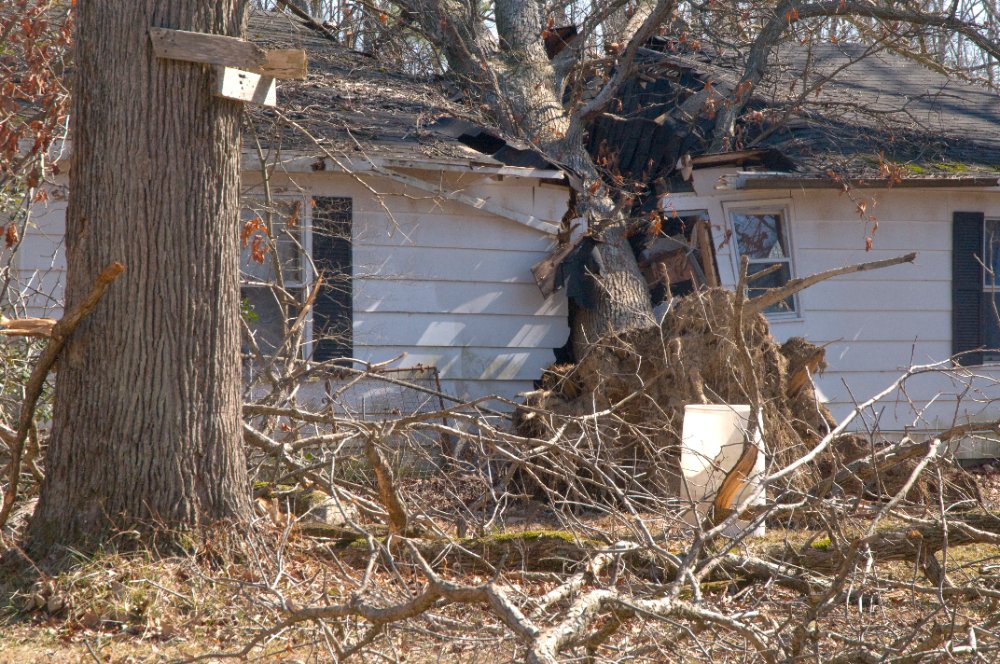
Removal of the tree itself is often treated separately from the repair and capped at a fixed amount. See How much insurance pays for removal below.
The Kentucky Department of Insurance’s claims guide also expects homeowners to prevent further damage, for example by tarping a roof or boarding a window, and to keep receipts for that emergency work.
If the tree fell in the yard or across the driveway
A tree that comes down without hitting anything is usually the homeowner’s problem. The Kentucky Department of Insurance says coverage is not provided for trees that fall onto driveways or in open areas. The Iowa Insurance Division agrees that a tree that fell without causing damage may not be covered.
Other states’ regulators are not all as strict about driveways. Texas guidance mentions coverage when limbs block a driveway, and Oklahoma’s winter storm guidance mentions trees that fall on a driveway. The difference comes down to policy wording, so read the debris removal section of the policy or ask the agent before assuming either way.
If the tree landed on a car
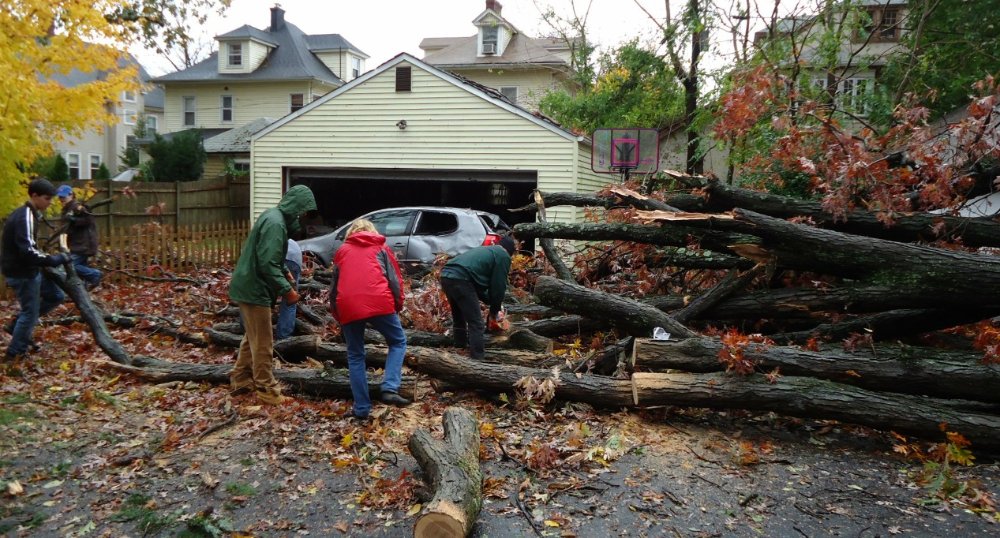
The homeowners policy does not pay for the car. The Maryland Insurance Administration, the Iowa Insurance Division and the Texas Department of Insurance all say the same thing: damage to a vehicle from a falling tree is paid by the comprehensive coverage on the auto policy, if the owner carries it.
If it was the neighbor’s tree
The answer surprises many people: it is usually your own policy that pays. The Oklahoma Insurance Department says a homeowners policy covers damage to your structure even when the tree was on someone else’s property. The Iowa Insurance Division adds that the deductible still applies.
The exception is negligence. Oklahoma’s guidance says that if a neighbor was notified that their tree was a safety concern and did nothing, the neighbor could be considered negligent. Maryland’s regulator notes that when a neighbor knew their tree was dead, the homeowner’s insurer may seek reimbursement from the neighbor.
That is why it pays to raise a concern about a neighbor’s hazard tree in writing, and to keep a copy.
If the tree was dead or diseased
Insurance covers sudden, accidental damage, not upkeep. The Iowa Insurance Division says that if a tree falls because of neglect, disease or rot and the risk was known beforehand, the claim may be denied.
In Kentucky the most common example is the ash tree. The Kentucky Division of Forestry reports emerald ash borer confirmed in 105 of the state’s 120 counties. A dead ash leaning toward a house is a maintenance problem today and a possible denied claim after the next storm. The guide to emerald ash borer symptoms explains what to look for.
The same logic applies to a split trunk, a large dead limb over the roof, or a tree leaning more each year.
How much insurance pays for removal
Even when removal is covered, there is usually a cap. The Maryland Insurance Administration says many policies pay a limited amount, usually between $500 and $1,000, to remove fallen trees. It also notes that the amount is typically based on the event, not the number of trees that fell.
The exact figure is written into each policy, usually in the section on debris removal or trees, shrubs and other plants. Removing a large tree from a roof can cost more than that limit, and any difference falls to the homeowner.
What to do after a tree falls
- Get people clear and stay away from downed lines. Call the utility for any line contact before doing anything else.
- Document everything. The Kentucky Department of Insurance claims guide says to take photos or video of the damaged areas and personal property. Photograph the tree, where it fell, what it hit and the stump or break point.
- Prevent further damage. Cover holes in the roof or windows with a tarp or plywood, and keep all receipts for emergency work to give to the insurer.
- Notify the insurance company promptly. The Kentucky DOI guide says to report damage as soon as you know about it.
- Get a written estimate for removal. Keep it in the claim file next to the repair estimate.
- Watch for storm chasers. The Kentucky DOI warns that many fraudsters travel from state to state after storms, and its claims guide says never to pay the full amount before the work is complete. Complaints go to the Kentucky DOI at 800-595-6053.
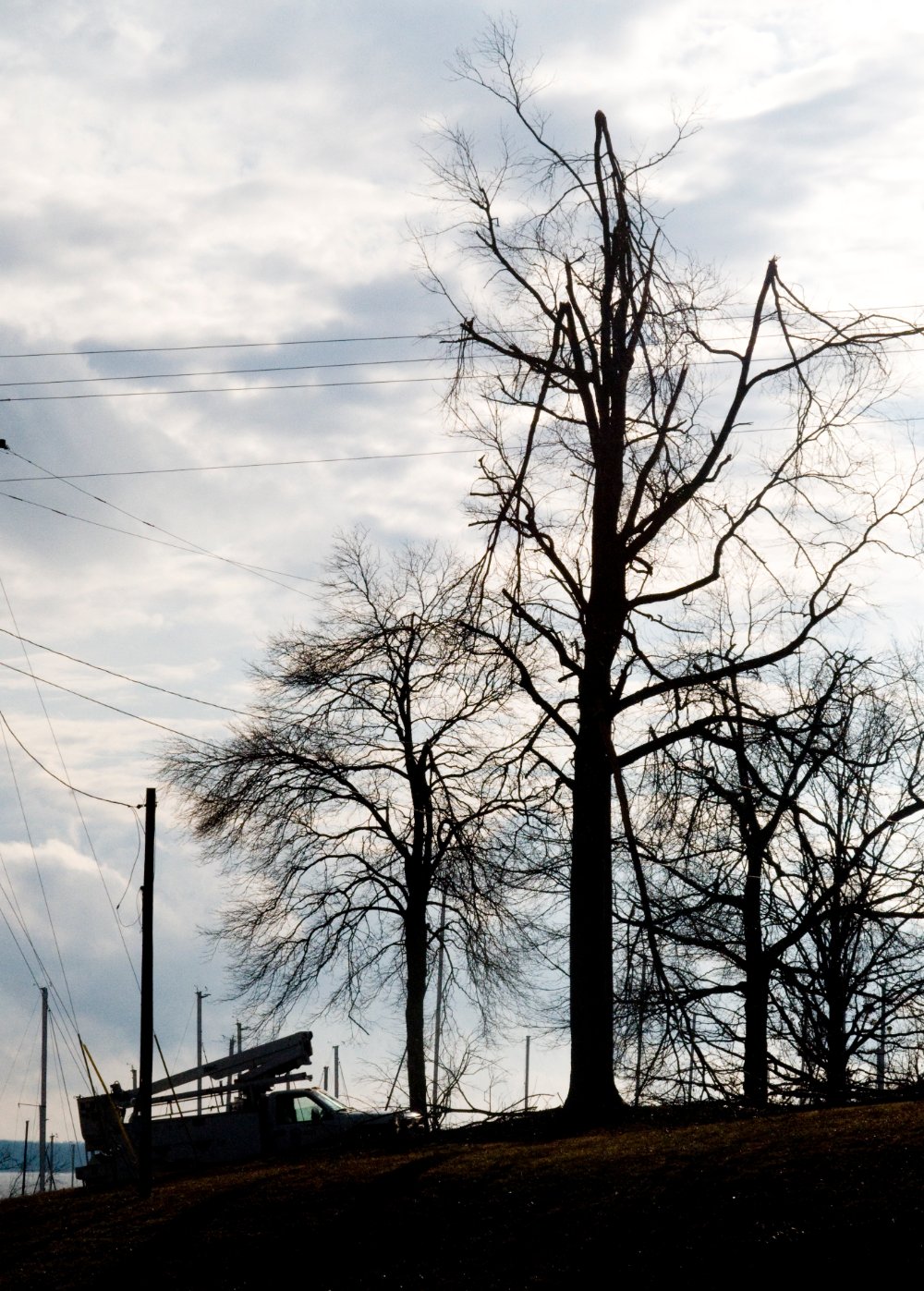
Kentucky also sets deadlines for insurers. Under 806 KAR 12:095, an insurer must acknowledge a claim within 15 days and offer any payment due within 30 calendar days of receiving proof of loss. If it needs more time, it must send a written update every 45 calendar days.
Kentucky’s storm history
Ice has caused some of Kentucky’s worst tree damage. In January 2009, the National Weather Service in Paducah recorded at least an inch of ice across western Kentucky, with locally destructive icing near 1.5 inches. Its storm report noted that most trees lost limbs and some whole trees came down. The federal disaster declaration that followed (FEMA-1818-DR) authorized debris removal assistance in 97 Kentucky counties, Fayette County among them.
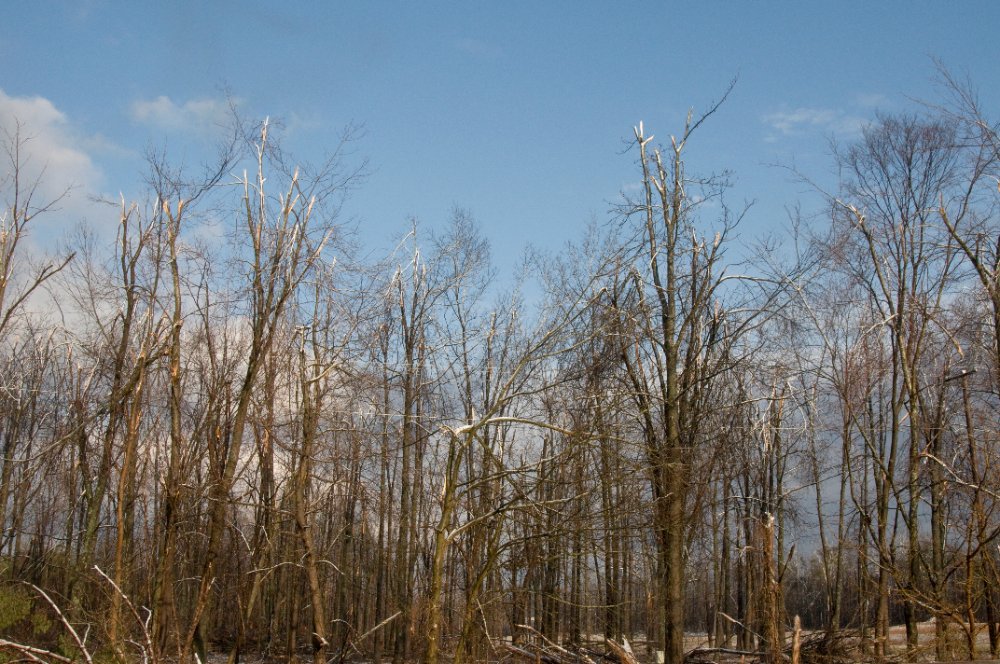
In February 2021, the National Weather Service in Jackson recorded up to three quarters of an inch of ice in eastern Kentucky, with power outages reaching 150,000 at the peak and numerous trees snapping under the weight.
The guide to protecting trees from ice storm damage covers what can be done before the next one.
FAQs
Does homeowners insurance pay to remove a fallen tree in Kentucky?
Usually only if it falls on insured property such as the house, a garage, a barn or a fence. The Kentucky Department of Insurance says trees that fall onto driveways or in open areas are not covered.
Will insurance pay to remove a dead tree before it falls?
Removing a standing tree is maintenance, which homeowners policies are not designed to pay for. And if a known dead or rotten tree later falls, the Iowa Insurance Division notes the claim may be denied.
Who pays if my neighbor’s tree falls on my house?
Your own homeowners policy, minus your deductible, according to the Oklahoma Insurance Department and the Iowa Insurance Division. If the neighbor was warned the tree was a hazard and did nothing, your insurer may pursue the neighbor.
Does homeowners insurance cover a tree that falls on my car?
No. Damage to the car is paid by the comprehensive coverage on an auto policy, according to the Maryland, Iowa and Texas insurance regulators.
How much will insurance pay for tree removal?
The Maryland Insurance Administration says many policies pay between $500 and $1,000, usually per event rather than per tree. Check the policy’s debris removal section for the exact limit.
How long does an insurer have to pay a claim in Kentucky?
Under 806 KAR 12:095, an insurer must acknowledge the claim within 15 days and offer any payment due within 30 calendar days of receiving proof of loss.
When a tree comes down in Central Kentucky
Central Kentucky Tree Service has handled fallen trees and storm cleanup across the Bluegrass since 2003. If a tree is on your house, your car or your power line, call 859-333-7246 for emergency tree removal. For a tree that fell in the yard, or a dead tree you would rather deal with before the next storm, request a quote and we’ll come out and take a look.
We work throughout Lexington and nearby towns, including Nicholasville, Georgetown, Versailles, Winchester and Richmond. See every town on the service areas page.
Sources
- Kentucky Department of Insurance, Stay Alert to Frauds and Scams (2024)
- Kentucky Department of Insurance, Property Insurance Claims Guide (2024)
- Kentucky Administrative Regulations, 806 KAR 12:095
- Maryland Insurance Administration, fallen trees
- Iowa Insurance Division, tree damage and insurance (2025)
- Oklahoma Insurance Department, fallen trees
- Oklahoma Insurance Department, winter storm guidance
- Texas Department of Insurance, fallen trees
- NAIC, A Consumer’s Guide to Home Insurance
- National Weather Service Paducah, January 2009 storm data
- National Weather Service Jackson, February 2021 ice storm
- Federal Register, FEMA-1818-DR (2009)
- Kentucky Division of Forestry, Forest Health Highlights 2024